-3 2x1.jpg)
Anniversary Observations
March 11, 2019, 6:00AMANS Nuclear Cafe
The seismic event was huge and was felt all over the world. With a moment magnitude of over 9.0, the earthquake and was the fourth largest ever in the more than 100 years of recorded history. Huge land masses shifted as much as 2.4 meters, and the rotation of the earth was changed so that days were suddenly just a little (but measurable) bit shorter. It had sped up the world.
 ANS member Dr. Christopher Morrison was a recent guest on
 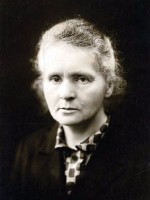 The start of Marie Curie's story isn't like most of the other scientists that had made a name for themselves throughout history, mostly because she was a grown woman by the start of the 20th century. But she was the first woman to do a lot of things, including getting a Ph.D. from a university in France, and winning a Nobel Prize. She was also the first person ever to win a Nobel Prize in two different fields of science. To say she pushed the societal and scientific boundaries of her era is an understatement.
 In January, the U.S. Environmental Protection Agency